Pumpkin Risotto

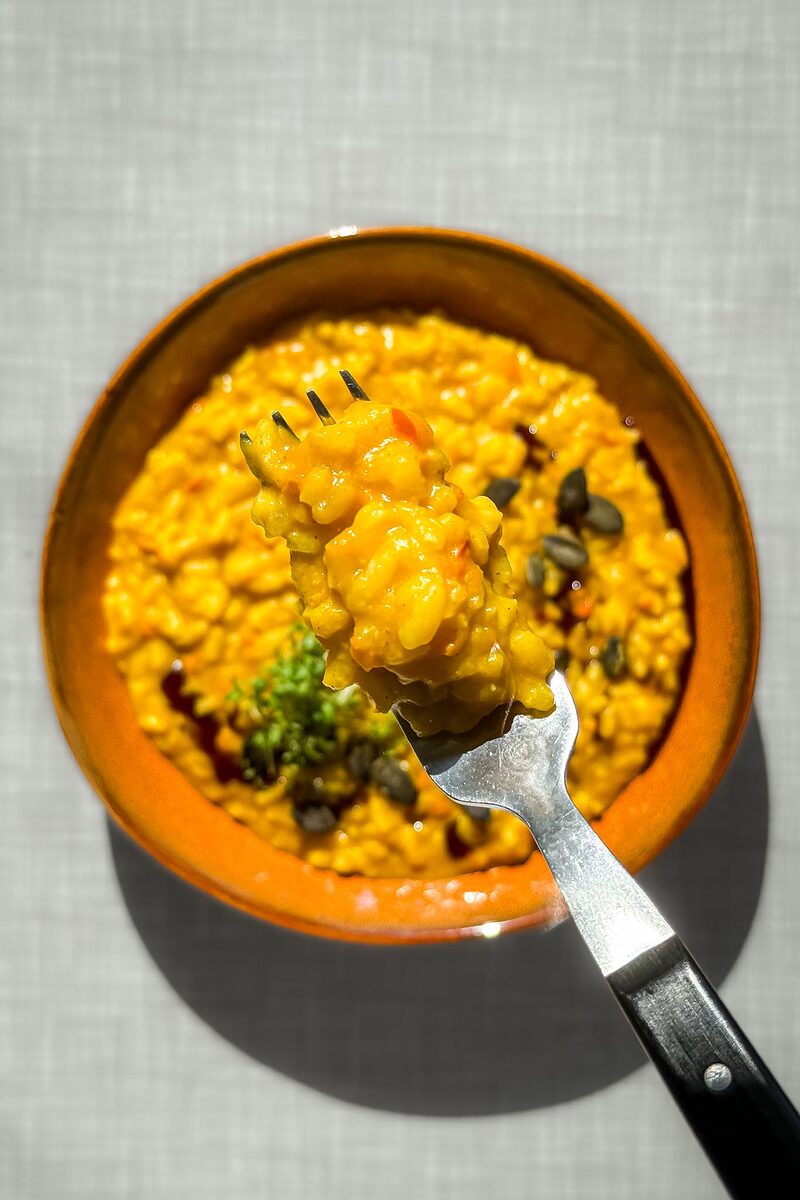
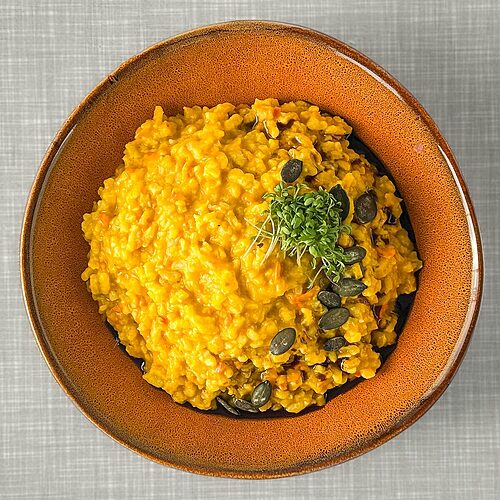
This vegan pumpkin risotto with fresh pumpkin is wonderfully creamy without Parmesan or any other cheese. It’s especially simple to make because the pumpkin cooks right with the rice – no canned pumpkin purée and no roasting in the oven needed. Inspired by classic Italian-style risotto, this version can optionally be finished with pumpkin seed oil and roasted and salted pumpkin seeds for an Austrian twist.
How Do You Make Pumpkin Risotto Creamy Without Parmesan?
You don’t need Parmesan, heavy cream, coconut milk, or plant-based cooking cream to make a creamy risotto, as my wild garlic risotto already proves. The characteristic creamy consistency comes primarily from the starch in the risotto rice, which is gradually released into the liquid as it cooks.
There’s a second factor at work in this pumpkin risotto: the fresh pumpkin cooks right along with the rice. If you cut it small enough – or, even better, coarsely grate it – it becomes very soft as it cooks and partially blends into the risotto. This creates an especially creamy texture without pumpkin purée.
The final step is the mantecatura: Remove the risotto from the heat and vigorously stir in cold vegan butter. This helps the starch, liquid, and fat emulsify into a creamy risotto. Traditional Italian risotto is typically finished with butter and Parmesan; vegan butter and nutritional yeast work very well in this vegan version.
I add the nutritional yeast only at the very end. It gives the risotto a subtle cheesy, savory flavor without overpowering the delicate pumpkin.
What Kind of Pumpkin Is Best for Pumpkin Risotto?
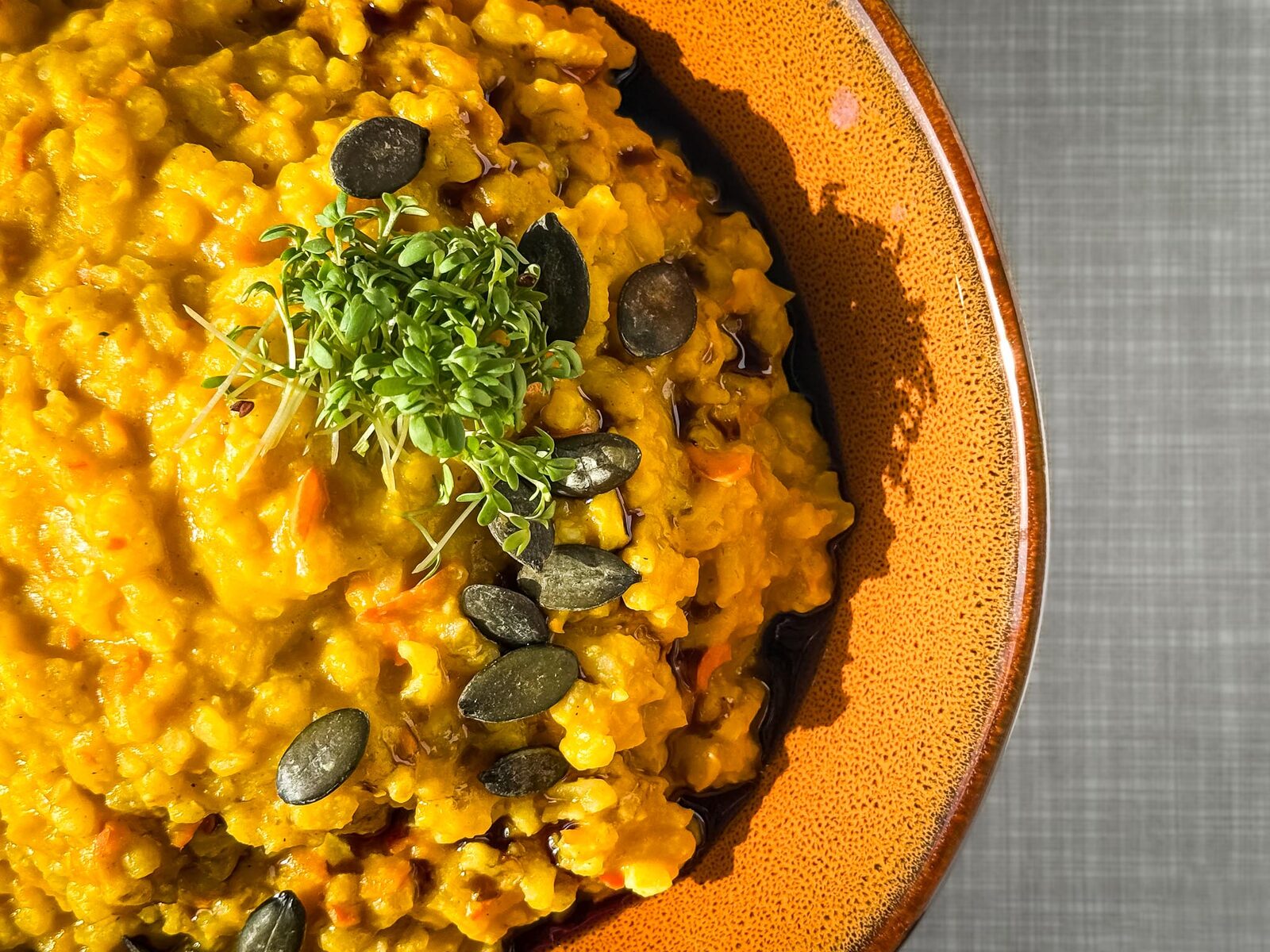
My two favorites are Hokkaido pumpkin and butternut squash, and I’ve made this risotto successfully with both. For the risotto pictured in this post, I chose a Hokkaido squash.
Hokkaido pumpkin, also known as red kuri squash, doesn’t need to be peeled. Its skin softens as it cooks and is perfectly edible. It also has a slightly nutty flavor and gives the pumpkin risotto a deeper orange color.
For this risotto, I recommend peeling butternut squash. Its skin stays firmer than Hokkaido skin. Butternut has a milder, slightly buttery flavor, and the finished risotto will usually be a little lighter in color and more delicate in flavor.
Musquée de Provence or another flavorful cooking pumpkin can work well, too. I wouldn’t use spaghetti squash for this risotto because its flesh separates into strands as it cooks.
My Most Important Tip: Cut the Pumpkin Really Small
One of the most important details in this recipe isn’t actually the rice – it’s the size of the pumpkin pieces.
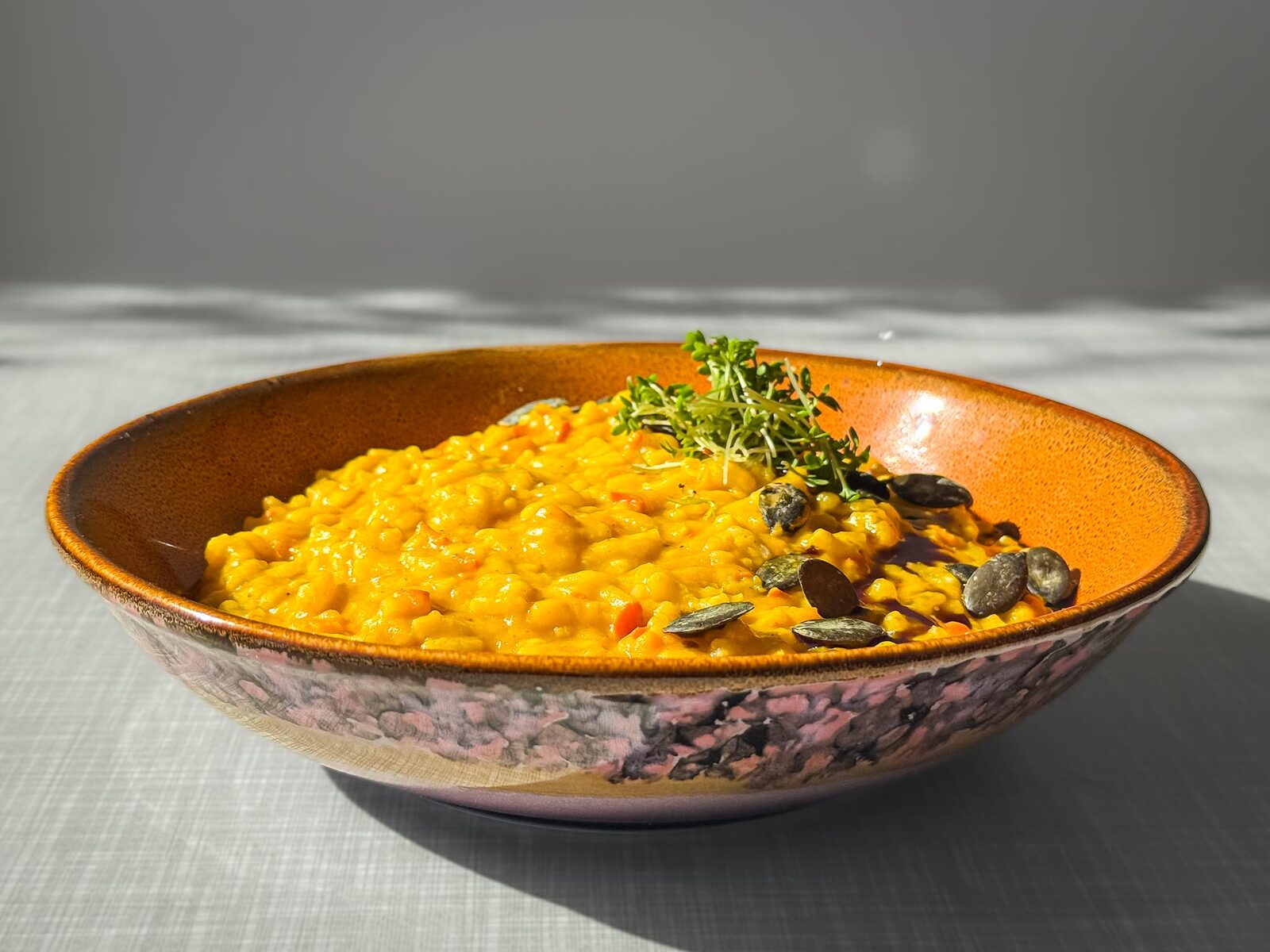
If you’re dicing the pumpkin, keep the cubes no larger than about 1 cm (bit less than 1 inch. If the pieces are much bigger, the rice may be ready while the pumpkin is still too firm.
For an even creamier pumpkin risotto, coarsely grate the fresh pumpkin instead. This is especially quick with a food processor. The grated pumpkin almost completely breaks down as it cooks and blends into the rice, which is ideal if you want a very creamy risotto without using pumpkin purée.
If you prefer visible pieces of pumpkin in your finished risotto, stick with small cubes.
How to Make Creamy Pumpkin Risotto
Besides keeping the pumpkin pieces small, the basic rules for a good Italian-style risotto apply:
- Toast the rice briefly. This starts the classic risotto method before adding the wine and broth.
- Use warm or hot vegetable broth. Cold liquid lowers the temperature of the risotto every time you add more.
- Don’t add all the broth at once. Add it in batches, waiting until most of the liquid has been absorbed before adding more.
- Stir regularly, but not frantically. Risotto needs some attention, but you don’t have to stir nonstop for the entire cooking time. Regular stirring helps create a creamy consistency and prevents the rice from sticking to the bottom or sides of the pot.
- Don’t overcook the rice. The risotto should be creamy, but the individual grains of rice should still have some structure.
- Finish with the mantecatura. Remove the pot from the heat and finish the risotto with cold vegan butter and nutritional yeast.
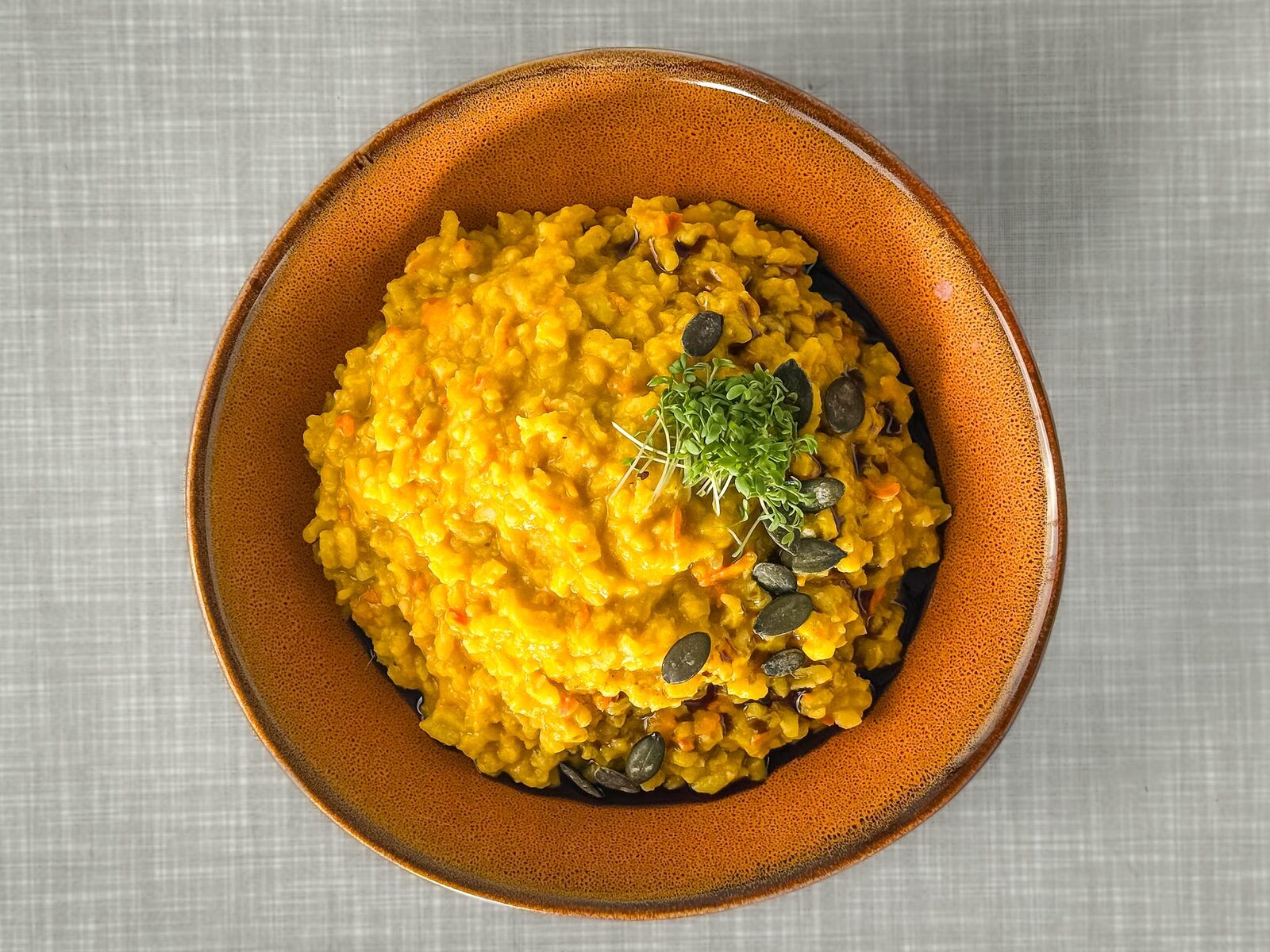
One more thing: Finished risotto should look slightly looser in the pot than you ultimately want it on the plate. The rice continues to absorb liquid after cooking. Wait too long to serve it and a beautifully creamy risotto can quickly become quite thick.
If your pumpkin risotto isn’t creamy enough, there may be too little liquid, the pumpkin pieces may be too large, or the final mantecatura may be missing. Also make sure not to overcook the rice and serve the risotto immediately after the mantecatura.
Can You Make Pumpkin Risotto Without Wine?
Yes. Pumpkin risotto is easy to make without wine.
Simply replace the white wine with a little additional vegetable broth. To make up for the acidity the wine would normally provide, I also add a small splash of lemon juice.
Start with just a little lemon and taste again at the end. The acidity should balance the pumpkin’s subtly sweet, nutty flavor rather than stand out.
What to Serve with Pumpkin Risotto
Pumpkin risotto can easily be served as a main course on its own. If you want to make it a little more substantial, pair it with green vegetables and a savory source of protein.
Pan-fried or oven-roasted Brussels sprouts work especially well, as does crispy pan-fried smoked tofu. Steamed or roasted broccoli is another simple option.
Since the risotto itself is soft and creamy, vegetables with a little bite and crispy tofu add a nice contrast.
For toppings and lighter sides, I also recommend:
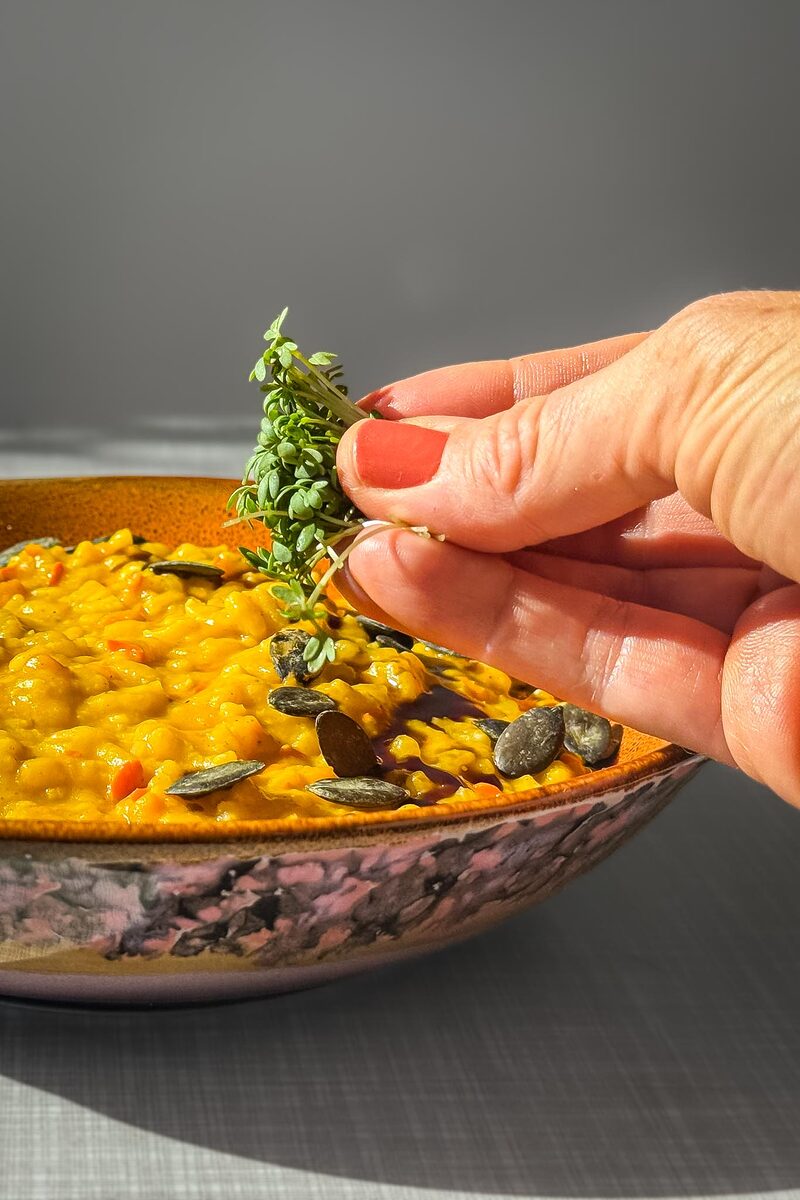
- Pumpkin seeds: Roasted and salted pumpkin seeds (pepitas) add crunch as well as a little extra seasoning.
- Pumpkin seed oil: A drizzle of pumpkin seed oil over the finished risotto intensifies the nutty pumpkin flavor and gives this Italian-inspired dish an Austrian twist.
- Crispy sage: Fry fresh sage leaves in a little vegan butter until crisp and add them just before serving. Pumpkin and sage are a particularly good match.
- Vegan feta: My vegan almond feta, for example, adds a salty, tangy contrast to the pumpkin’s mild sweetness.
- Freshly ground black pepper: Simple, but especially effective with a relatively mild risotto.
- Salad: Lamb’s lettuce, arugula, or a simple green salad with a tangy dressing all go well with pumpkin risotto. Fresh, slightly bitter greens balance the creamy risotto better than a heavy salad with lots of additional ingredients.
Can You Make Pumpkin Risotto Ahead of Time?
Only to a certain extent. Risotto is best served fresh from the pot because its texture is at its creamiest immediately after the mantecatura. As it sits, the rice continues to absorb liquid and the risotto becomes increasingly thick and soft. Put it this way: for lunch at the office the next day, yes. For serving to guests, no.
If you’re cooking for guests, you can still do plenty of prep ahead of time: Cut or grate the pumpkin, chop the onion, prepare your toppings, and have the vegetable broth ready. Then all you need to do later is cook the risotto itself.
In professional kitchens, risotto is sometimes partially cooked ahead and finished later. For this simple pumpkin risotto, however, I prefer prepping the ingredients in advance and cooking the risotto itself fresh.
How to Reheat Pumpkin Risotto
If you have leftovers, add a splash of vegetable broth or water and gently reheat the risotto while stirring. It won’t be quite as creamy as freshly made risotto, but the additional liquid makes a noticeable difference.
Can You Freeze Pumpkin Risotto?
Technically, yes, but it isn’t my first choice. Freezing and reheating changes the texture of the rice, so thawed pumpkin risotto usually won’t have quite the same creamy consistency as it does when freshly cooked.
Vegan Pumpkin Risotto – Simple, Creamy & Italian-Style
Useful equipment
- 1 risotto spoon *) Nice to have, for less resistance when stirring
Ingredients
- 30 g vegan butter for sautéing
- 1 large onion
- 2 cloves garlic
- 400 g risotto rice *)
- 100 ml dry white wine
- 800 g pumpkin see notes
- 1,4-1,5 liters vegetable broth warm to hot (see note)
- 1 ¼ tsp salt
- black pepper freshly ground, to taste
- nutmeg freshly ground, just a little
- 4 tbsp nutritional yeast *)
- 50 g vegan butter cold and cubed
Optional for Serving
- 1 handful roasted and salted pumpkin seeds (pepitas) *)
- 2 tbsp pumpkin seed oil *)
- cress, parsley, or dill fresh
Instructions
- Prep the vegetables: Finely chop the onion and garlic, keeping them separate. Remove the seeds and stringy pulp from the pumpkin and cut the flesh into large pieces. Coarsely grate it using a food processor. Alternatively, cut the pumpkin into small cubes (see note).
- Sauté the onion and garlic: Melt the 20 g (1 ½ tbsp) vegan butter in a large pot over medium heat. Sauté the onion until translucent. Add the garlic and cook for about 30 seconds.
- Toast the risotto rice: Add the risotto rice and cook for 1–2 minutes, stirring, until the grains begin to look slightly translucent.
- Deglaze with wine: Deglaze the risotto rice with white wine and let it simmer for about 1 minute, stirring constantly, until the wine has mostly evaporated.
- Add the pumpkin: Add the grated pumpkin and stir it well into the rice.
- Cook the risotto: Add enough warm vegetable broth to just cover the rice and pumpkin. Simmer over medium-low heat, stirring regularly. Once most of the liquid has been absorbed, add another portion of broth. Continue in this way until the rice is creamy but still has a little bite, about 20 minutes. If necessary, add a little more broth or water.
- Finish with the mantecatura: Remove the pot from the heat. Stir in the salt, pepper, freshly grated nutmeg, and nutritional yeast. Add the cold cubes of vegan butter and stir vigorously until the risotto is wonderfully creamy. Taste and adjust the seasoning if needed.
- Serve: Serve the pumpkin risotto immediately. If you like, top with roasted and salted pumpkin seeds (pepitas), a drizzle of pumpkin seed oil, and fresh herbs (cress, parsley, or dill).
Notes
- Pumpkin:
- Which one: Red Kuri (Hokkaido) and kabocha squash don’t need to be peeled for this risotto. Their skins soften as they cook and are edible. Butternut squash should be peeled.
- Weight: 800 g (1.8 lb) weighed before removing the seeds, or about 650–670 g (1.4–1.5 lb) cleaned.
- Dice it, instead of grating: If you don’t have a food processor or grater for coarsely grating the pumpkin, cut it into very small cubes instead. First cut the pumpkin into slices about 1/4 to a bit less than 1/2 inch (0.5–1 cm) thick, then dice them as finely as possible. Add the diced pumpkin after the onion and garlic and sauté for 2–3 minutes before adding the risotto rice. Push the pumpkin slightly to the side so the rice has as much contact with the bottom of the pot as possible, then toast the rice for 1–2 minutes.
- Broth: I mix hot water with my homemade vegetable stock powder (approx. 1,5 tablespoon to 1,500 ml / 6.4 cups of water).
- Mantecatura: The vegan butter for the mantecatura should be very cold – you can even freeze it after cutting it into cubes – and should only be stirred in after removing the pot from the heat. This helps the butter, starch, and liquid come together for an especially creamy consistency.