

Authentic Pasta e Fagioli
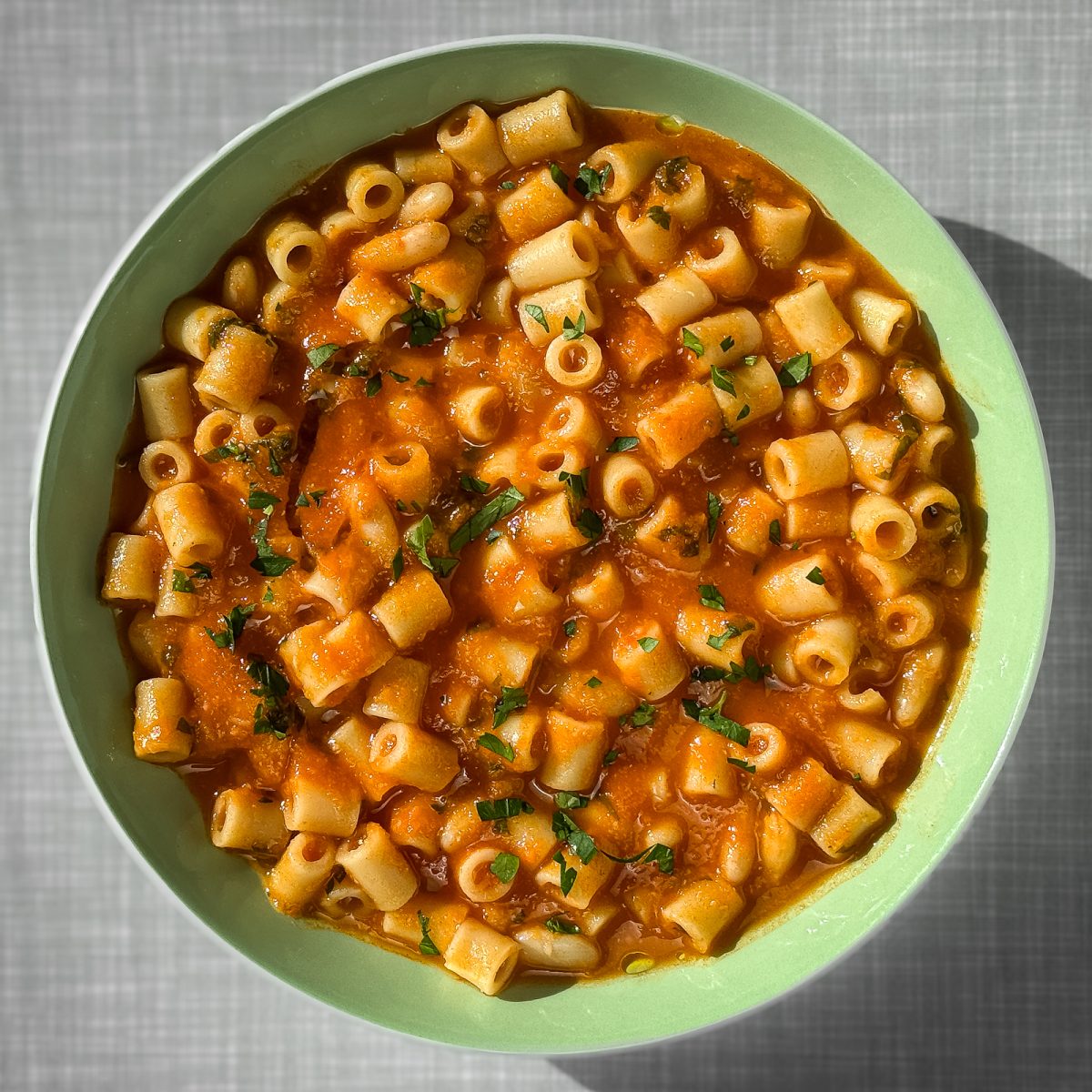
Pasta e Fagioli is a simple and hearty Italian recipe for creamy pasta with white beans. This vegetarian or vegan pasta dish is typical of Italian “cucina povera” (poor man’s cuisine), a simple, down-to-earth cuisine made from a few regional ingredients. Particularly practical: Pasta e Fagioli is a one-pot dish, meaning everything is prepared in a single pot. I first encountered this dish during a vacation in Naples—and have cooked it countless times since. Now it tastes just like it does at an Italian restaurant, and I’m happy to share the recipe with you here.
“That’s amore”
“When the stars make you drool, just like pasta fazool – that’s amore.” Dean Martin sings about pasta e fagioli in his classic song “That’s Amore,” a musical declaration of love for pasta fazool: that’s what the dish is called in the Neapolitan dialect, where ‘fasule’ simply means “beans,” and in the US it became “fazool.”
Anyone who has ever eaten really good pasta fagioli knows that this declaration of love is by no means exaggerated: creamy, simple, and yet full of flavor—a plate of pasta e fagioli is sure to warm your heart and stomach.
And thanks to the fagioli (or fasule or fazool), it also contains a good dose of plant-based protein. Italian cuisine knows better than almost any other how to use beans in ingenious ways – no wonder, since pasta e fagioli is a typical dish of “cucina povera,” the traditional cuisine of the poor, which makes the most of very little.
Another great Italian dish shows just how inspiring this simplicity and nutritional richness can be: vegan white bean soup. On my blog, you’ll also find the following favorite recipes with pasta and beans: a light vegan Mediterranean pasta salad or summery white bean zucchini pasta with lemon.

Is pasta fagioli vegan?
Yes and no. Actually, yes, because it basically consists of beans, tomatoes, and pasta. But (…) this recipe is cooked very differently from north to south, depending on the region.
In the restaurants in Naples and Salerno, where I ate pasta e fagioli for the first time in 2021, it was served as “of course it’s vegan.” Nevertheless, pancetta is used in many recipes.


By the way: it tasted so incredibly good in this simple restaurant in Naples, where we always had great food—and so cheap. It was just very noisy, because mopeds were constantly zooming by. And the interior isn’t very charming: there are a few slot machines and the guests don’t necessarily look like foodies or gourmets.

Anyway, the food was surprisingly good, which is why we went there several times. Since our vacation, I’ve been trying to recreate this exact version, and I think I’ve finally succeeded! Et voilà …
Ingredients
Such a simple dish and yet so difficult to replicate, because it leaves a lot of room for interpretation: fresh tomatoes or canned tomatoes. Lots of tomatoes, few tomatoes, or even just tomato paste. Cook dried beans fresh or use canned white beans instead. Borlotti beans or cannellini beans.
There were also differences in the pasta: I was served everything from ditalini rigati, the short pasta with a hole in the middle, to pasta mista (a mixture of pasta shapes) and even a type of potato noodles. No matter where you eat it or research it, it’s always different.
These are the ingredients I like to use to make pasta fagioli:
- White beans (dried, if available Cannellini beans)
- Vegetables and herbs: onion, celery, carrots, garlic, and parsley (a “soffritto”)
- Olive oil
- Spices: salt, vegetable broth, bay leaf, chili, and pepper
- Tomatoes (fresh)
- Pasta
- Water

Ditalini Rigati or Ditaloni Rigati
Ditalini rigati or ditaloni rigati (a tiny bit longer) are the pasta shapes of choice for pasta fagioli. These are short pasta shapes with a hole in the middle.
In Vienna where I live both varieties are unfortunately very difficult to find, but as you read this post in English you most probably live somewhere else, so I am not going to get into details like I do at the German version.
But – in case where you live it is also difficult to get them: Alternatives I have used so far include Elicoidali and Mezzi Rigatoni, both from Pasta di Martino or Pipette, available from Barilla, for example, are also an option. Penne rigate are almost too long and too narrow, as the beans can’t “hide” in them as well—but if you’re not going to make pasta fagioli at all, it’s better to make it with penne.


Incidentally, ditalini pasta is often available in Turkish supermarkets. However, I can’t comment on the brands or taste, as I haven’t bought any yet (because I always think back to the cheap local pasta I cooked in my apartment during a vacation in Montenegro. At the time, I thought, “pasta is pasta,” but in the end, I could hardly eat it).
Another side note: When it comes to the Barilla brand, I always think of the following moment when I was in a supermarket in Naples looking for Ditalini Rigati (which are available there from every brand) and was standing in front of the Barilla pasta when a lady came up to me and said, “Don’t buy Barilla! This is only for the tourists!”

Preparation
And here too, the same applies: there are countless recipes online, so it took me a while to find the perfect one for me, one that tastes authentic but isn’t rocket science.
I don’t want to go into too much detail here, because as always, you’ll find the recipe at the end of the post. But what I would like to say is that I opted for a simple one-pot version and deliberately decided against the following version (but I’ll mention it here in case you want to try it – I’d love to hear about your experience in the comments, maybe you can convince me after all):
What I don’t do is add the water gradually, as you would with a risotto. I didn’t always follow this method, but I often did. The idea behind it is that stirring gradually releases the starch from the beans and pasta, and the beans also break down as a result of the stirring, forming a cream.

For me, however, the constant stirring caused the pasta to break down too – somehow the result was too mushy in the end. Besides, you should stir occasionally anyway; in my opinion, that’s all you need to do. I didn’t want to complicate the recipe, on the contrary.
So: I stir when making risotto, but not here. For pasta fagioli, I stick to the version where I blend some of the beans: this also makes it wonderfully creamy and the pasta stays intact.
I hope you like the result just as much as I do. Buon appetito!

You might also like to eat …


Authentic Pasta e Fagioli: The Vegan Version of an Italian Classic
Useful equipment
Ingredients
- 230 g white beans dry, buy cannellini beans if you find them
- 1 large onion
- 2 sticks celery
- 2 carrots
- 8 cloves garlic
- 10 tbsp olive oil including 2 tbsp for serving
- A little chili depending on how spicy you want it
- 800 g tomatoes fresh
- 2 l hot water
- 2.5 tsp salt
- 1 tbsp vegetable stock powder or alternatively increase the amount of salt slightly
- 1 bay leaf
- 500 g Ditalini Rigati pasta Alternatively: another short pasta with holes.
- 1 handful parsley parsley
- A little black pepper
Instructions
- Soak the dry beans overnight in plenty of water and cook them until soft the next day, depending on their size and soaking time, for about 30-60 minutes (cannellini beans tend to take a little longer).
- Peel the onion and garlic, cut off the ends of the carrots, and chop the vegetables (onion, celery, carrots, and garlic). As they will be blended later you don't need to chop them pretty or small.
- Pour 8 tablespoons of olive oil into a large saucepan and heat gently.
- Sauté the chopped vegetables in the oil over medium heat for a few minutes. If you are using chili, add it now.
- Chop the fresh tomatoes and add them to the vegetables in the pot. Simmer for about 3-4 minutes.
- Add about ¼ of the cooked beans and blend everything well with a hand blender.
- Then add the hot water, salt, soup powder, and bay leaf.
- When the water boils, add the pasta and the remaining cooked beans.
- Cook on medium heat for 1 minute less than the time indicated on the package. Stir occasionally to prevent burning.
- Now stir in the chopped parsley (set aside some for garnishing) and season with salt and pepper to taste.
- Let it simmer for a few more minutes, then everything will thicken a little and the pasta will soak up the liquid.
- Serve the pasta fagioli on a plate, sprinkle with a little fresh parsley, and drizzle with olive oil.
Video
Notes
- Preparation time = Soak the beans and cook until soft.
- Instead of 230 g (1.3 cups) of dry beans, you can also use canned beans (about 530 g / ~18.7 oz / ~3 cups drained weight). Then you can skip step 1.)
- Instead of 800 g of fresh tomatoes, you can use a bottle of passata (about 700 ml / ~23.7 fl oz) or two 400 g cans of chopped tomatoes (each about 14.1 oz).
- Reheating: Even though many pasta dishes taste even better reheated or eaten the next day, this one doesn’t quite fall into that category. The pasta absorbs too much of the sauce and becomes quite soft, so it’s better enjoyed right away.